Missque Font: Where Soft Bold Meets Modern Edge
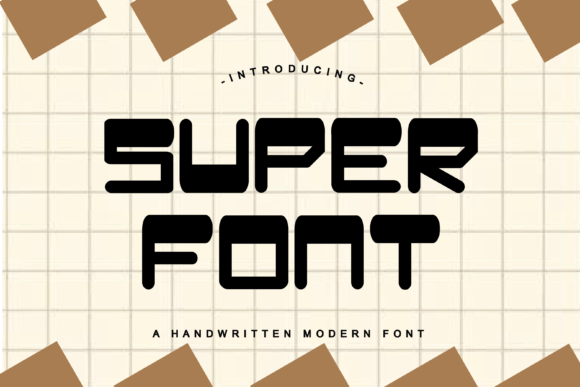
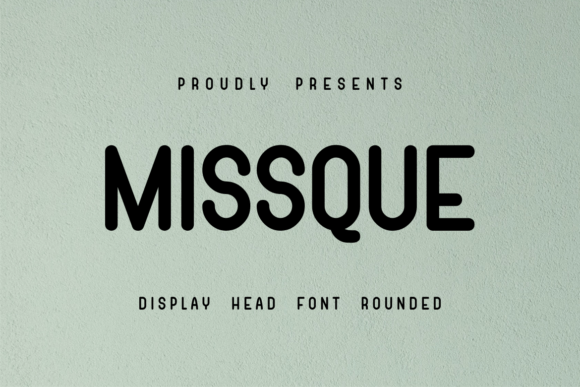
There's a particular challenge in design work where you need typography that feels both approachable and forward-thinking—friendly enough to connect with people, yet distinctive enough to stand apart. Missque Font sits in that interesting middle ground, a soft bold display typeface with rounded ends that subtly ventures into techno territory. It's the kind of font that catches your eye without shouting, and that balance makes it surprisingly versatile for a range of creative and commercial projects.
A Typeface That Bridges Multiple Design Worlds
What makes Missque visually compelling is its blend of different stylistic influences. The rounded terminals give it warmth and approachability—think of how curves tend to feel more inviting than sharp angles. Yet there's an underlying structure here that nods toward techno and futuristic aesthetics, giving the letterforms a sense of confidence and modernity. This isn't a font trying to be everything; it's a font that found a genuine intersection between friendly and forward-looking.
For designers and business owners, this hybrid personality solves a real problem. You often need a typeface that communicates professionalism without feeling cold, or creativity without looking chaotic. Missque manages to thread that needle. The slightly modified letter shapes prevent it from reading as generic, while the bold weight ensures visibility across different sizes and applications.
Practical Applications Across Your Projects
Let's talk about where this kind of typeface actually works in practice. If you're building a brand identity for a tech startup, a creative agency, or a lifestyle brand that wants to feel contemporary, Missque's character makes it a strong candidate for logo design. The rounded bold forms create logos that are memorable at a glance and reproduce well whether they're scaled down on a business card or blown up on a trade show banner.
Packaging design is another area where this font's personality shines. Products targeting younger demographics or brands positioning themselves as innovative benefit from typography that feels current without being trendy in a way that'll date quickly. Missque's techno undertones give packaging a modern edge, while the softness of the curves keeps it from feeling intimidating on a shelf.
For social media graphics, readability at small sizes matters enormously. The bold weight and clear letterforms of a display font like this hold up well in Instagram stories, Facebook ads, and Pinterest pins. When you're competing for attention in a fast-scrolling feed, having headings that are instantly legible gives you a real advantage. Pair it with a clean sans serif font for body text, and you've got a combination that looks polished without much effort.
Web designers will find Missque useful for hero sections, landing page headers, and call-to-action buttons where you need text to command attention. It works particularly well for brands in the tech, design, gaming, or creative services space. The font's personality aligns naturally with digital-first businesses that want to project innovation and energy.
Print materials—posters, flyers, brochures, invitations—benefit from a premium font with this kind of character. Event invitations for product launches, gallery openings, or modern celebrations get an instant upgrade when the typography feels intentional. Missque's rounded bold style creates visual impact on posters while maintaining the kind of polish that makes people take a second look.
Matching Typography to Your Brand Goals
Choosing the right font style comes down to understanding what you're actually trying to communicate. Before selecting any typeface, write down three to five adjectives that describe your brand or project. If words like modern, bold, friendly, innovative, or clean appear on that list, a font like Missque is worth exploring.
That said, no font exists in isolation. Font pairing is where many projects succeed or struggle. A display font with this much personality needs a complementary partner for longer text. Consider pairing Missque with a straightforward sans serif font for body copy—something like a geometric or neo-grotesque style that won't compete for attention. Alternatively, if your project leans more editorial, a simple serif font can create an interesting contrast that feels sophisticated.
Test your pairings in context rather than in isolation. Drop your heading and body text combination into a mockup of your actual project—a social media post, a website layout, a product label. You'll quickly see whether the relationship between fonts feels harmonious or disjointed. Pay attention to size relationships too; your display heading should be roughly two to three times the size of your body text for comfortable visual hierarchy.
Readability Considerations for Real-World Use
While Missque works beautifully for headlines, logos, and short bursts of text, it's worth thinking about readability in longer contexts. Display fonts are designed for impact rather than extended reading. Use this typeface strategically—hero text, section headings, pull quotes, button labels—where its bold character enhances rather than hinders comprehension.
Letter spacing and line height adjustments can make a significant difference in how any font performs. If you're using Missque for a headline that feels slightly cramped, adding a touch of letter spacing often improves legibility and gives the text room to breathe. Similarly, when setting short paragraphs in a display font for poster or packaging design, generous line height prevents the text from feeling dense.
Color contrast matters too. A bold font with rounded characteristics reads best against backgrounds that provide strong contrast. Avoid placing it on busy photographic backgrounds without a semi-transparent overlay or solid color block behind the text. The goal is always clarity first, style second.
Understanding What's Included and Licensing
When investing in a creative font for commercial projects, review what's actually included in your purchase. Most premium fonts come with multiple styles or weights—potentially regular, italic, condensed, or extended variations. Understanding these options lets you create more dynamic designs without mixing in incompatible typefaces. Check whether the font includes special characters, ligatures, or alternate letterforms that could add personality to specific projects.
Commercial licensing is something many designers and small business owners overlook until it becomes a problem. If you're using Missque Font for client work, merchandise, digital products, or any commercial application, make sure your license covers those uses. Some licenses differentiate between desktop use, web fonts, and embedding in digital products. Read the terms carefully—it's far easier to get licensing right upfront than to sort it out after a project launches.
Bringing It All Together
Typography decisions might seem small compared to other design elements, but they shape how people perceive your work before they read a single word. A typeface like Missque offers that rare combination of personality and practicality—distinctive enough to be memorable, structured enough to be functional. Whether you're crafting a brand identity, designing marketing materials, or building a visual presence online, having a font that bridges the gap between approachable and innovative gives you a genuine creative advantage. The best typography choices are the ones that feel inevitable in hindsight, as if no other font could have served the project as well.