Blending Romance and Grit: The Romeo & Juliet Font Duo
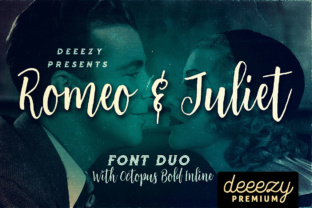
If you’ve ever stared at a blank canvas, trying to find that one typeface that balances emotion with impact, you know the struggle is real. We often look for fonts that tell a story, not just ones that display letters. That is exactly where the Romeo & Juliet Font Duo enters the conversation. It isn’t just a random pairing of two files; it is a carefully curated design system that combines the fluidity of hand-lettering with the stability of bold display typography. This combination offers a unique solution for designers who need to convey both warmth and strength in a single visual identity.
The real magic lies in the contrast. You have a hand-drawn brush script that feels organic and intimate, paired against a bold display typeface that commands attention. This dynamic creates a visual tension that is incredibly satisfying to the eye. It mimics the way we naturally communicate—sometimes softly and personally, sometimes loudly and with authority. Whether you are building a brand from scratch or refreshing your social media aesthetic, understanding how to leverage this specific pairing can significantly elevate your visual communication.
The Organic Soul of the Script
Let’s start with the first half of this equation: the brush script. In a digital world often dominated by rigid geometric shapes, a hand-drawn font brings a necessary human touch. This specific script is not your standard calligraphy; it has a unique, textured style that feels like it was written with a real instrument on real paper. It captures the "Romeo" aspect—romantic, flowing, and expressive. For businesses that rely on trust and personality, such as boutique bakeries, wedding planners, or lifestyle bloggers, this font acts as a digital handshake. It feels personal.
However, style should never completely compromise function. One of the standout features of this script is its extensive multi-language support. Often, premium fonts with artistic flair limit themselves to basic English characters, which is a headache for international brands or diverse audiences. This typeface avoids that trap, allowing you to maintain your brand’s voice across different markets. Furthermore, the inclusion of stylistic alternates and a dedicated swash font changes the game for logo design. These extras allow you to customize specific letters, ensuring that your typography doesn’t look "out of the box." You can add flourishes to the beginning or end of a word to create a custom lockup that feels entirely bespoke.
Structural Impact of the Display Typeface
Every hero needs a sidekick, and in typography, the script needs an anchor. The second component of the Romeo & Juliet Font Duo is a bold display font that brings the "Juliet" energy—strong, defined, and undeniable. While the script draws the eye with its movement, the display font holds the viewer there with its weight. It is designed to be a headline maker. Think of the headers on your website, the main text on a poster, or the product name on packaging.
What makes this display font particularly interesting for creative projects is the inclusion of a grunge version. Most fonts come in standard clean cuts, but the grunge texture adds an element of vintage nostalgia or industrial edge. It looks fantastic on merchandise like t-shirts and tote bags where a "lived-in" aesthetic is popular. While this bold typeface prioritizes visual impact over multi-language versatility, it excels at its primary job: hierarchy. It ensures that your most important message is read first. The pairing of a delicate script with a heavy sans-serif or blocky display font is a classic design rule for a reason—it simply works.
Practical Applications: From Screen to Print
So, how do you actually use this in your next project? The versatility of this font duo allows it to adapt to various mediums, provided you keep readability in mind. Here are some practical ways to integrate these assets into your workflow:
- Brand Identity & Logo Design: Use the display font for the company name to establish presence, and the script for the tagline to add personality. This creates an immediate visual hierarchy that helps brand recognition.
- Social Media Graphics: Instagram and Pinterest thrive on aesthetics. The brush script is perfect for quote graphics or personal messages, while the bold font works great for announcements and sale alerts that need to cut through the noise.
- Packaging Design: If you sell physical products, the texture of the brush script can evoke craftsmanship and quality. Pair it with the grunge version of the display font for a rustic, artisanal look on labels and boxes.
- Editorial & Blog Layouts: Use the display font for H1 and H2 headings to grab attention, and save the script for pull quotes or accent text. This breaks up long blocks of copy and keeps the reader engaged.
- Invitations & Stationery: This is the natural habitat for a romance-inspired duo. Wedding invitations, event flyers, and greeting cards benefit immensely from the elegant flow of the script.
Strategic Typography: Pairing and Readability
As a designer or business owner, it is tempting to use every cool feature a font offers at once. However, restraint is the key to professional presentation. When working with the Romeo & Juliet Font Duo, consider the "less is more" approach. The brush script, while beautiful, is best used for short bursts of text. Long paragraphs written in a hand-drawn script can become illegible and cause eye strain for your audience. Always prioritize readability; if your customers have to squint to read your message, they will move on.
Test your pairings before finalizing. A common mistake is placing the script font over a busy background image. Because the strokes are thin and textured, they can get lost in the details of a photo. In these instances, the bold display font is your best friend. Its solid weight stands up against complex backgrounds. Conversely, on a clean, minimalist background, the script can take center stage for a more elegant feel.
Commercial Use and Licensing
Finally, a practical note on professional usage. If you are using these assets for a client or selling products featuring these designs, you must ensure you have the correct commercial license. Most premium fonts, including high-quality duos like this one, require a specific license for commercial use. This protects both the creator and you. Reviewing the license agreement ensures you can confidently sell your merchandise or bill your clients without legal hiccups. It is a small administrative step that ensures your creative business runs smoothly.
Ultimately, the goal of modern typography is to evoke a feeling while delivering a message. This specific font duo offers a rich palette of textures—from the romantic grit of the brush to the loud confidence of the display type. By mixing these styles thoughtfully, you can create designs that feel both timeless and fresh, connecting with your audience on a visual and emotional level.